
Startup Funding: Types, Options and How to Get Funding
Starting a business requires more than a good idea. Founders may need money for product development, marketing, employees, technology, and daily operations. Understanding different funding options helps you choose the right approach for your business stage.
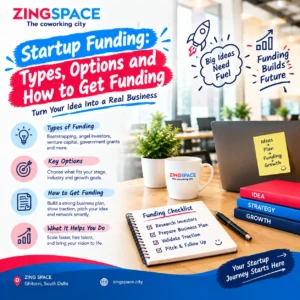
What Is Startup Funding?
Startup funding means the money used to start, operate, or grow a new business. The amount required depends on the type of business, expected expenses, team size, and growth plans.
| Business Need | Example |
| Product | App, website, or physical product |
| Marketing | Ads, content, social media |
| Team | Hiring and salaries |
| Technology | Software and equipment |
| Operations | Daily business expenses |
| Workspace | Office or coworking space |
| Growth | New customers or markets |
A founder should first calculate the actual requirement instead of raising money simply because other startups are doing it.
When Does a Startup Need Funding?
Not every business needs outside money immediately. Some founders start with personal savings and reinvest their revenue. Others need capital before they can launch or grow.
| Business Stage | Common Financial Need |
| Idea stage | Research and testing |
| Early stage | Product development |
| First customers | Sales and marketing |
| Growing team | Employees and workspace |
| Expansion | New markets and resources |
The right time depends on your business model and financial position.
Main Types of Startup Funding
Different businesses can use different sources of capital.
| Funding Option | How It Works | Suitable For |
| Bootstrapping | Founder uses personal money | Early-stage businesses |
| Friends & Family | Money from personal connections | New businesses |
| Angel Investors | Individuals invest in a business | Early-stage startups |
| Seed Investment | Capital for early development | Growing startups |
| Venture Capital | Professional investors provide capital | High-growth companies |
| Business Loan | Money borrowed and repaid | Businesses with repayment ability |
| Crowdfunding | Many people contribute money | Selected products and ideas |
| Government Schemes | Support for eligible businesses | Qualifying startups |
You do not need to use every option. Your business stage, risk level, and financial requirement should guide the decision.
1. Bootstrapping
Bootstrapping means using your own savings or business revenue.
It allows founders to maintain greater control over their company. The limitation is that growth may be slower if the available capital is small.
Best for: Businesses that can start with limited investment.
2. Angel Investors
Angel investors are individuals who invest their own money in businesses they believe have growth potential.
Apart from capital, some may also provide industry knowledge, contacts, or business guidance.
However, founders should understand the ownership and investment terms before accepting money.
3. Seed Investment
Seed investment is generally used during the early development stage.
The money may be used for:
- Building a product
- Testing the market
- Hiring initial employees
- Marketing
- Improving the business model
- Getting the first customers
A clear plan is important because investors want to understand how their money will help the business move forward.
4. Venture Capital
Venture capital comes from professional investment firms. It is generally associated with businesses that have the potential to grow quickly.
VC funding can provide substantial capital, but it can also involve giving investors ownership or agreeing to specific investment terms.
It is therefore important to understand the deal before accepting it.
How to Get Funding for a Startup
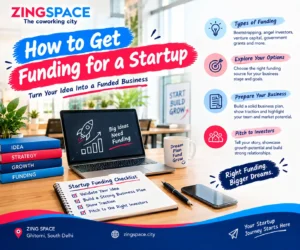
Getting investment requires preparation. A strong idea is useful, but investors also want to understand the business behind it.
1. Define Your Business
Explain what you sell, who your customers are, and what problem your business solves.
2. Research the Market
Study your customers, competitors, pricing, and demand. This helps you explain why your business has an opportunity.
3. Create a Business Plan
| Section | What to Include |
| Problem | Customer problem |
| Solution | Your product or service |
| Market | Target customers |
| Revenue | How you earn |
| Costs | Expected expenses |
| Growth | Future plans |
4. Calculate Your Requirement
Prepare a realistic budget. Explain exactly where the money will be spent and how long it is expected to support the business.
5. Prepare Your Pitch
A pitch can include your product, customers, market, business model, current progress, team, financial information, and investment requirement.
6. Find Suitable Sources
Research investors, incubators, accelerators, loan providers, and other relevant funding sources. Choose options that match your business stage.
How Should You Use the Money?
After receiving capital, careful spending becomes important.
For example, a growing team may need a professional workspace. Instead of immediately spending heavily on setting up a traditional office, a flexible workspace can reduce setup work.
| Traditional Office | Flexible Workspace |
| Furniture setup | Ready workspace |
| Separate meeting setup | Meeting rooms available |
| Maintenance to manage | Workspace facilities managed |
| Larger initial setup | Choose space according to need |
| Less flexibility | Easier to adjust workspace |
This allows founders to direct more attention toward customers, employees, marketing, and business development.
How Zing Space Helps Startups
As a startup grows, working from home may become difficult. Teams may need a professional environment for daily work, collaboration, and client meetings.
Zing Space offers:
- Open desks
- Dedicated desks
- Private cabins
- Conference rooms
- Virtual office solutions
A startup can select a workspace according to its current team size instead of immediately investing in a complete traditional office setup.
This can be useful for founders who want a professional working environment while keeping workspace requirements flexible.
Website: zingspace.city
Contact: +91-99588-63626
Conclusion
Funding can help a new business develop its product, hire people, reach customers, and expand. However, raising money should always have a clear purpose.
Understand your financial needs, prepare your business plan, compare suitable funding options, and manage the capital carefully.
As the business grows, the workspace should grow with it. Zing Space provides flexible workspace solutions that can help startups maintain a professional environment without immediately taking on the full burden of setting up a traditional office.