
When Should a Startup Move From Home to an Office?
Starting a business from home is common for new founders. It keeps costs low and gives you time to test your idea, find customers, and understand the market.
But as the business grows, home may no longer be enough. Your team may become bigger, client meetings may increase, or you may need a more professional place to work.
So, when should a startup move from home to an office?
There is no fixed rule. The right time depends on your team, revenue, customers, productivity, and business needs.
Why Do Startups Start From Home?
Home is usually the easiest place to begin.
| Benefit | Why It Helps |
| Low cost | No office rent |
| Flexible | Easy to manage your schedule |
| Simple | Laptop and internet may be enough |
| Less risk | More money stays in the business |
For an early-stage founder, staying at home can be a good office idea while testing the business.
The decision changes when your workspace starts limiting your growth.
1. Your Team Is Growing
A solo founder can usually work from home. But when employees join, things become different.
| Team | Possible Requirement |
| 1 person | Home workspace |
| 2–3 people | Shared workspace |
| 4–6 people | Dedicated workspace |
| 7–10 people | Private office |
These are not strict rules. The important question is:
Can your current workspace support your team?
If not, start looking at professional workspace options.
2. Home Is Affecting Productivity
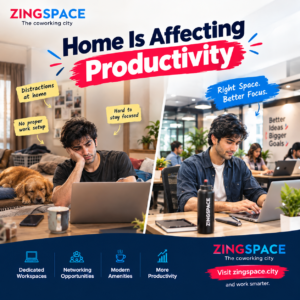
Home can be comfortable, but it can also create distractions.
Common problems include:
- Noise
- Family interruptions
- Limited space
- Poor work setup
- Household responsibilities
- Difficulty separating work and personal life
If these problems happen regularly, a professional workspace may help you create a better work routine.
Your office idea should solve a real business problem, not simply make the startup look bigger.
3. You Are Meeting Clients
Regular client meetings are a strong reason to consider an office.
A home may not provide privacy, while cafés can be noisy. A professional workspace gives you a suitable environment for meetings.
| Requirement | Possible Option |
| Occasional meeting | Meeting room |
| Individual work | Open desk |
| Fixed workstation | Dedicated desk |
| Small team | Private cabin |
| Growing team | Private office |
4. You Need a Professional Image
As your startup grows, you may meet clients, investors, partners, and employees.
A professional workspace can create a better business experience.
However, you do not need an expensive traditional office.
The better office idea is one that gives you the facilities you need while keeping your business costs under control.
5. Your Team Needs Better Collaboration

Some work is easier when people are physically together.
| Activity | Benefit of Shared Workspace |
| Brainstorming | Faster discussions |
| Marketing planning | Better collaboration |
| Design reviews | Quick feedback |
| Sales meetings | Easier coordination |
| Client meetings | Professional environment |
If your team frequently needs to work together, a coworking space or private workspace can be useful.
6. Your Business Can Afford It
Do not rent an office simply because your business is growing.
First, calculate the complete cost.
| Cost | Consider |
| Rent | Monthly workspace cost |
| Deposit | Initial payment |
| Internet | Business connectivity |
| Furniture | Tables and chairs |
| Maintenance | Repairs and upkeep |
| Equipment | Printer and other tools |
Your office should support growth, not take money away from important areas such as marketing, employees, or product development.
If revenue is still unpredictable, flexible workspace can be a safer option than a long-term lease.
Home vs Coworking vs Traditional Office
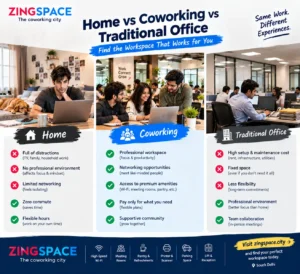
Startups have more than two choices.
| Factor | Home | Coworking | Traditional Office |
| Cost | Low | Moderate | Usually higher |
| Flexibility | High | High | Lower |
| Professional environment | Limited | Yes | Yes |
| Meeting facilities | Limited | Usually available | Yes |
| Team workspace | Limited | Yes | Yes |
For many early-stage startups, coworking can be the middle step between working from home and renting a traditional office.
How Much Space Does a Startup Need?
Do not choose an office just because you want a bigger-looking business.
| Business Stage | Workspace Option |
| Solo founder | Open desk |
| 2–3 employees | Shared workspace |
| 3–6 employees | Dedicated desks/private cabin |
| 7–10 employees | Larger private workspace |
| Regular meetings | Meeting room access |
Think about your current team and expected growth before choosing.
Zing Space for Growing Startups
If working from home is becoming difficult, you do not necessarily need to rent a large traditional office.
Zing Space provides open desks, dedicated desks, private cabins, conference rooms, and virtual office solutions for startups, freelancers, and growing businesses.
You can choose a workspace according to your current requirements instead of spending heavily on setting up and managing a traditional office.
Focus on building your business while having a professional place to work and meet clients.
Explore Zing Space or contact +91-99588-63626 to learn more about available workspace options.