
Conference Room or Meeting Room? A Practical Guide for Businesses
Imagine that you need to meet a new client tomorrow. You could meet at a café, arrange the discussion at your office, or book a separate space for the meeting. Each option has different benefits, but the right choice depends on the purpose of the discussion.
Many small businesses do not need a permanent meeting area every day. They only need a suitable place when a client visits, a team needs to plan a project, or an important presentation is scheduled.
Understanding the available room options can help you make a practical decision without spending money on facilities you rarely use.
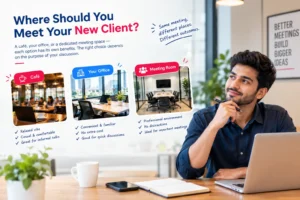
Start With the Purpose of Your Meeting
Before booking a room, think about what you need to accomplish. The purpose of the meeting is often more important than what the space is called.
| Meeting situation | What to look for |
| Presenting a business proposal | Space for attendees and presentation equipment |
| Discussing a project with a client | Privacy and comfortable seating |
| Interviewing a job applicant | A quiet environment with minimal interruptions |
| Planning work with your team | Seating that supports discussion |
| Conducting a workshop | Enough space for participants and required equipment |
A room that works well for a two-person consultation may not be suitable for a presentation involving several people. Identify your requirements before comparing venues.
Does Your Business Need a Conference Room?
A conference room can be useful when the meeting involves formal presentations, several participants, or detailed business discussions.
For example, a marketing agency presenting a campaign to a client may need space for the team, the client, and presentation equipment. A startup discussing a proposal with potential partners may also benefit from a dedicated setting.
However, not every meeting requires a large room. Booking a space that is bigger than necessary may increase your costs without improving the meeting.
The goal should be to find a room that supports the discussion and provides the facilities you actually need.
When Is a Smaller Meeting Space Enough?
A smaller meeting space can be suitable for activities that do not require a formal presentation setup.
Consider these examples:
- A freelancer discussing project requirements with a client.
- A consultant conducting a private business discussion.
- A small team reviewing its weekly progress.
- A recruiter interviewing a candidate.
- A business owner meeting a service provider.
For these situations, comfortable seating, a suitable location, and a quiet environment may matter more than the size of the room.
The name used by the provider is not always a reliable guide. Check the actual facilities before making a booking.
Five Questions to Ask Before Booking
1. How many people will attend?
Confirm the seating capacity. Everyone should have enough space to participate comfortably.
2. What equipment will you need?
If you plan to present slides or demonstrate software, ask whether the required screen, display connection, and internet access are available.
3. How much time will the meeting take?
Estimate the meeting duration before selecting a booking option. Check whether hourly or longer bookings are available and compare the total price.
4. Is the location convenient?
Consider the travel time for clients and colleagues. A convenient location can make attending the meeting easier.
5. Are there any additional charges?
Ask whether the quoted price includes the facilities you need. Confirm any extra fees before finalising the booking.
These questions can help you compare options based on your actual requirements rather than choosing a room simply because it looks attractive.
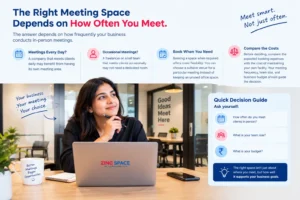
Finding a Suitable Business Meeting Space in South Delhi
If your clients or team members are based in South Delhi, choosing a convenient location can make meeting arrangements simpler.
Zing Space is located in Ghitorni, South Delhi. Businesses considering its workspace facilities can enquire about conference room availability and confirm the room size, equipment, pricing, and booking terms before visiting.
You can explore the Zing Space Conference Room service page to find out whether the available option matches your meeting requirements.
Always confirm the facilities and current charges directly with the provider before booking.
Frequently Asked Questions
Can a small business book a conference room only when needed?
Yes, if the provider offers bookings for the required duration. Check availability and pricing before making arrangements.
What is more important: room size or equipment?
Both matter, but their importance depends on the meeting. Choose adequate seating first, then confirm that the room has the equipment needed for your discussion.
Should I choose a meeting room based only on price?
No. Compare the location, privacy, capacity, facilities, booking duration, and additional charges along with the price.
Conclusion
A successful business meeting requires a suitable environment, not necessarily the largest or most expensive room. Start with the purpose of your discussion, estimate the number of attendees, and identify the facilities you need.
Compare the available options carefully before booking. This approach can help freelancers, startups, and established businesses arrange professional meetings while keeping their workspace expenses under control.