
Step By Step Guide to Company Registration in India
Starting a business is exciting, but the legal setup can feel confusing for a beginner. Company registration is the process of legally registering a business with the relevant government authority.
It gives the business a formal identity and allows it to operate under a recognised legal structure. However, the exact process, documents, fees, and rules depend on the country and type of business.
This guide explains the basics in simple language.
What Is Company Registration?
Company registration means creating a legal business entity through the applicable government registration system.
Once registered, a company may receive an official registration number or identification number. This number can be used to identify the company in government and business records.
| Term | Simple Meaning |
| Company Registration | Officially registering a company |
| Company Incorporation | Creating a separate legal company |
| Business Registration | Registering a business with the relevant authority |
| Company Registration Number | Official identification number given to a registered company |
| Business Registry | Government or official database containing business records |
The terms can differ between countries, so beginners should always check the rules applicable to their location.
Why Is Company Registration Important?
A formal business structure can make it easier to operate, sign contracts, open business accounts, and meet regulatory requirements.
Some common reasons businesses choose formal registration include:
- Creating a recognised business identity
- Separating the business structure from the owner where applicable
- Improving credibility with customers and suppliers
- Supporting access to business banking and financial services
- Making ownership easier to define
- Meeting applicable legal and tax obligations
However, registration alone does not automatically mean that every licence or tax registration is completed. Some businesses may need additional registrations.
Types of Companies and Business Structures
One of the first decisions is choosing the right structure.
| Structure | Generally Suitable For |
| Sole Proprietorship | One person running a business |
| Partnership | Two or more people running a business together |
| Private Limited Company | Businesses wanting a formal company structure |
| Public Company | Larger businesses that meet applicable requirements |
| LLP |
Businesses wanting elements of partnership and limited liability
|
| OPC | A one-person corporate structure where available |
| LLC | A limited-liability structure commonly used in some countries |
The names and legal rules can vary by jurisdiction. Therefore, do not choose a structure simply because another business uses it.
Company Registration Requirements
The requirements depend on the business structure and location.
However, applicants may commonly need information such as:
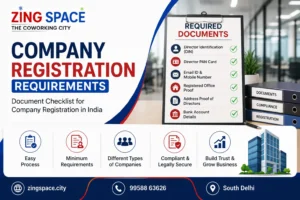
GST Registration Documents List: Checklist for New Applicants
| Requirement | Why It May Be Needed |
| Proposed company name | To identify the business |
| Owner/director details | To identify responsible people |
| Identity documents | To verify individuals |
| Address details | To establish the registered office/business address |
| Business activity | To describe what the company does |
| Formation documents | To establish the company’s legal structure |
| Contact details | For official communication |
| Government fees | For processing the application |
Some structures may require additional documents.
Basic Company Registration Process
The exact procedure differs between countries, but the general process often looks like this:
Choose Structure → Select Name → Prepare Documents → Submit Application → Verification → Approval → Registration Certificate
Step 1: Choose the Business Structure
First decide whether your business should operate as a sole proprietorship, partnership, LLC, private limited company, LLP, or another available structure.
Think about:
- Number of owners
- Liability
- Compliance requirements
- Tax treatment
- Future growth
- Cost of maintaining the structure
Step 2: Choose a Business Name
Your proposed name should meet the applicable naming rules.
Before applying, check whether the name is available and whether another business already has rights that could create a conflict.
If you want brand protection, remember that company name registration and trademark registration are not the same thing.
Company Name vs Trademark
This is a common beginner mistake.
| Company Name | Trademark |
|---|---|
| Identifies a registered business | Protects eligible brand identifiers |
| Used for legal/business records | Used for brand protection |
| Registered through the relevant business authority | Registered through the relevant trademark authority |
| Does not automatically give trademark protection | Can provide trademark rights where approved |
So, registering a company name does not automatically mean that the brand name is protected as a trademark.
Step 3: Prepare the Required Documents
After selecting the structure and name, prepare the required documents.
Depending on the jurisdiction and structure, these can include identity proof, address proof, incorporation documents, ownership details, and other declarations.
Do not upload documents based on random online checklists. Always verify the current requirements with the relevant government authority.
Step 4: Submit the Application
The application is submitted through the applicable government registration system.
The authority may review:
- Business name
- Applicant information
- Documents
- Registered address
- Business structure
- Other required information
If something is missing or incorrect, the authority may ask for clarification or corrections.
Step 5: Receive Registration Confirmation
After approval, the business may receive an incorporation certificate, registration certificate, registration number, or another official confirmation depending on the jurisdiction.
Keep these records safely because they may be needed for future compliance and business activities.
How Much Does Company Registration Cost?
There is no single worldwide company registration cost.
The total cost can depend on:
| Cost Factor | Why It Matters |
| Business structure | Different structures have different fees |
| Government filing fee | Charged for processing |
| Name reservation | May have a separate fee |
| Professional assistance | Optional in many situations |
| Registered office | May create additional costs |
| Licences | Some businesses require separate approvals |
Therefore, check the current government fee schedule for your jurisdiction before calculating the total cost.
Company Registration vs Business Registration
These terms are sometimes used interchangeably, but they can describe different things depending on the country.
Business registration is a broader term that can include registering a business under an applicable legal structure.
Company incorporation usually refers specifically to creating a separate corporate legal entity.
For example, a sole proprietor and a private limited company may both operate legally, but their legal structures are different.
Common Mistakes Beginners Should Avoid
| Mistake | Better Approach |
| Choosing a structure without research | Compare available structures |
| Ignoring name availability | Check before applying |
| Using outdated document lists | Verify current government requirements |
| Confusing registration with trademark protection | Treat them as separate processes |
| Forgetting additional licences | Check industry-specific requirements |
| Entering incorrect information | Review the application before submission |
SOURCES
https://google.com/goto?url=CAESfwHrOzAVUDInHsZleFoNuLrtCEm1UHGImgLAZdLOgW7KRDBZs-47EsNxbDU0gURJGdpoL_MFqzl–kdT0HHtMAMVYf-YvYIiROSIGzQ6Hi-Z2t3LY7-U3HWbLUD-Ddy3P0HFWTcuRSBjo8aWEA_YSk-uXJX5yANj61czX0hJOZI