
How Coworking Spaces Reduce Operational Costs for Businesses
Managing a business successfully is not only about increasing sales and attracting customers. One of the biggest challenges for startups, freelancers, and growing companies is controlling operational expenses. Office rent, electricity bills, maintenance charges, internet setup, furniture costs, and employee facilities can consume a large portion of a company’s monthly budget.
This is the reason why modern businesses are rapidly shifting toward why freelancers prefer coworking spaces. Instead of investing heavily in traditional office infrastructure, companies now prefer flexible and fully managed workspaces that help them save money while maintaining a professional working environment.
Coworking spaces offer ready-to-use offices with essential business facilities under one roof. Businesses can operate efficiently without worrying about office management or long-term financial commitments. In cities like Delhi and Gurgaon, where commercial office costs are constantly increasing, coworking spaces have become a smart and cost-effective solution for startups and small businesses.
Companies like ZingSpace are helping businesses reduce operational costs by providing flexible coworking solutions designed for modern work culture.
Understanding Operational Costs in a Business
Operational costs are the regular expenses required to run daily business activities smoothly. These expenses are unavoidable for every company, regardless of its size.
Some major operational costs include:
- Monthly office rent and security deposits
- Electricity and utility bills
- Internet and IT infrastructure setup
- Office furniture and interiors
- Housekeeping and maintenance services
- Security and reception management
- Employee workspace facilities
- Meeting room arrangements
- Administrative and management expenses
For startups and small businesses, managing all these costs together can become financially stressful. Traditional office spaces usually require large investments even before the business starts operating properly.
Coworking spaces solve this problem by offering fully managed office environments where businesses only pay for the services and space they actually use.
Eliminating Heavy Office Setup Expenses
Businesses often spend a large amount of money on interiors, office furniture, workstation arrangements, electrical fittings, networking systems, and meeting room infrastructure.
Apart from the financial burden, office setup also consumes valuable time and management effort. Startups and growing businesses usually struggle because they need to manage office operations along with business growth simultaneously.
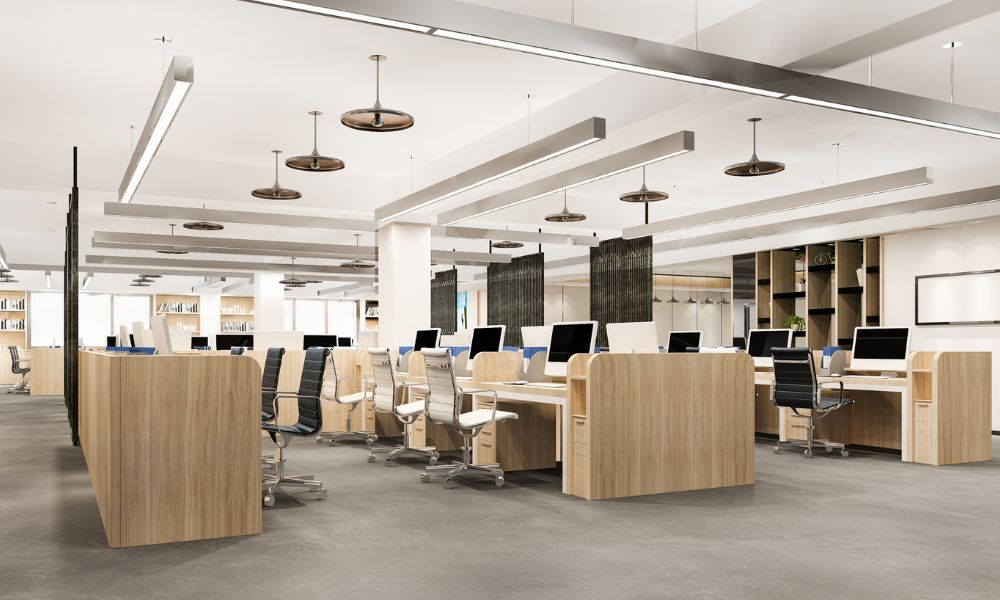
Coworking spaces completely remove this burden. Businesses get access to professionally designed office spaces that are already equipped with modern infrastructure, ergonomic seating, internet connectivity, meeting rooms, air conditioning, and essential office facilities.
This allows companies to start operations immediately without spending lakhs of rupees on office setup. The money saved can instead be invested in marketing, hiring, technology, or business expansion.
Reducing Monthly Rental Burden
Commercial office rent in prime business locations is becoming increasingly expensive, especially in metro cities. Along with rent, companies also need to manage maintenance charges, brokerage fees, parking expenses, and security deposits.
In a traditional office setup, businesses often end up paying for unused space because leases usually involve fixed office sizes and long-term agreements.
Businesses can choose workspace plans according to their actual team size and operational requirements. Whether it is a single desk for a freelancer or a private cabin for a growing startup team, companies only pay for the space they need.
This flexibility helps businesses reduce unnecessary rental expenses while still maintaining a professional office presence in premium commercial areas.
Avoiding Long-Term Lease Commitments
One of the biggest financial risks in traditional office setups is long-term lease agreements. Many commercial office owners require businesses to sign contracts for several years.
For startups and growing businesses, this creates financial pressure because business requirements can change rapidly. A company may expand, downsize, or shift work models within a short period.
Coworking spaces provide flexibility through short-term membership plans and scalable office solutions. Businesses can easily upgrade or reduce workspace capacity according to their current needs.
This adaptability helps companies avoid financial stress and maintain better control over operational expenses during uncertain business conditions.
Lowering Utility and Maintenance Costs
Managing a traditional office involves several recurring operational expenses beyond rent. Electricity bills, internet services, office cleaning, air conditioning maintenance, water supply, and security management all add to the monthly cost.
Additionally, businesses often need separate vendors and service providers to manage these operations efficiently.
Coworking spaces simplify this entire process by including most facilities within a single membership package. Businesses do not need to handle separate utility payments or maintenance responsibilities.
The shared operational model allows coworking providers to distribute costs efficiently among multiple companies, making premium office facilities much more affordable for individual businesses.
Access to Premium Infrastructure at Lower Cost
Many startups and freelancers cannot afford high-quality office infrastructure independently. Purchasing premium furniture, conference room equipment, high-speed internet systems, and advanced office technology requires substantial investment.
Coworking spaces provide access to all these facilities at a fraction of the actual cost.
Businesses benefit from:
- Fully furnished workstations
- High-speed internet connectivity
- Professional meeting rooms
- Reception and visitor management
- Cafeteria and lounge areas
- Printing and scanning services
- Power backup and security systems
This shared infrastructure model significantly reduces the financial burden on individual companies while improving overall workplace quality.
Improving Employee Productivity and Efficiency
Operational cost reduction is not only about saving money directly. Workplace productivity also plays an important role in business efficiency.
Employees working in poorly managed or uncomfortable office environments often experience distractions, reduced motivation, and lower performance levels.
Coworking spaces are built to provide a professional environment that encourages better productivity, teamwork, and smooth daily business operations. Modern interiors, comfortable seating, peaceful work zones, and professional surroundings help employees focus better on their tasks.
When employee productivity improves, businesses experience:
- Faster project completion
- Better collaboration among teams
- Reduced downtime
- Improved work quality
- Higher employee satisfaction
These improvements indirectly reduce operational inefficiencies and help businesses achieve better overall performance.
Supporting Hybrid and Flexible Work Culture
The way businesses operate and manage workplaces has evolved rapidly over the past few years. Many businesses now operate with hybrid or flexible work models where employees work both remotely and from office spaces.
Traditional offices often become inefficient in such situations because companies continue paying full office expenses even when office utilization remains low.
Coworking spaces solve this challenge by offering flexible seating arrangements and customizable workspace plans. Businesses can optimize office usage according to actual employee attendance.
This helps companies reduce unnecessary infrastructure costs while still maintaining professional workspaces for meetings, collaboration, and team operations.
Networking Opportunities That Reduce Business Costs
Another major advantage of coworking spaces is the networking environment they create. Coworking communities bring together startups, freelancers, consultants, agencies, and entrepreneurs from different industries.
This environment often creates opportunities for:
- Business partnerships
- Client referrals
- Collaboration projects
- Knowledge sharing
- Professional networking
Many businesses gain valuable clients and partnerships directly through coworking communities, reducing their marketing and customer acquisition expenses.
For startups and small companies, these networking opportunities can contribute significantly to long-term business growth.
Scalability Without Additional Financial Pressure
As businesses grow, their office requirements also change. Expanding a traditional office setup usually requires additional investment in furniture, infrastructure, and larger office spaces.
Coworking spaces provide easy scalability without major financial commitments. Businesses can increase workspace capacity whenever required without shifting offices or investing heavily in infrastructure expansion.
This flexibility helps companies manage growth more efficiently while maintaining financial stability.
Conclusion
Coworking spaces have transformed the way modern businesses manage office operations. Instead of investing heavily in traditional office setups, companies now prefer flexible workspaces that offer affordability, convenience, and scalability.
From reducing office setup costs to minimizing monthly operational expenses, coworking spaces help businesses optimize their resources more effectively. They also provide professional infrastructure, productive work environments, and valuable networking opportunities that support long-term business growth.
For startups, freelancers, remote teams, and growing companies, coworking spaces are no longer just an alternative office solution. They have become a strategic business decision that improves operational efficiency while reducing unnecessary expenses.
As the future of work continues to evolve, coworking spaces will remain one of the most practical and cost-effective solutions for businesses looking to grow smartly while controlling operational costs.
Related: Best Coworking Space in South Delhi for Startups with Flexible Office Solutions